BayesLands
Bayesian Landscape Evolution
Overview
Basin and Landscape Dynamics (Badlands) is a parallel TIN-based landscape evolution model, built to simulate topography development at various space and time scales. The model simulates hillslope processes (linear and non-linear diffusion), fluvial incision via the Stream Power Law and Transport Capacity Law for sediment erosion/transport/deposition, spatially and temporally varying geodynamic forces (horizontal and vertical displacements), and climatic forcing including sea-level fluctuations and precipitation variability. It integrates the gFlex package for elastic plate flexure calculations relevant to Earth's lithosphere.
Bayesian Inference with Parallel Tempering
The framework implements two approaches for estimating geological parameters:
- SC-Bayeslands — single-chain MCMC with 5% burn-in
- PT-Bayeslands — parallel tempering with 25% burn-in, running multiple chains at different temperatures across HPC clusters
Parallel tempering allows the sampler to escape local optima in the highly multimodal posterior landscape — a common challenge when estimating precipitation and erosion parameters. Surrogate neural networks trained on Badlands outputs accelerate convergence by approximating the expensive forward model during exploration phases.
Results
Comparison of PT-Bayeslands with SC-Bayeslands for the crater problem over 50,000 iterations, showing estimates of the posterior distribution and trace plots for the precipitation parameter.
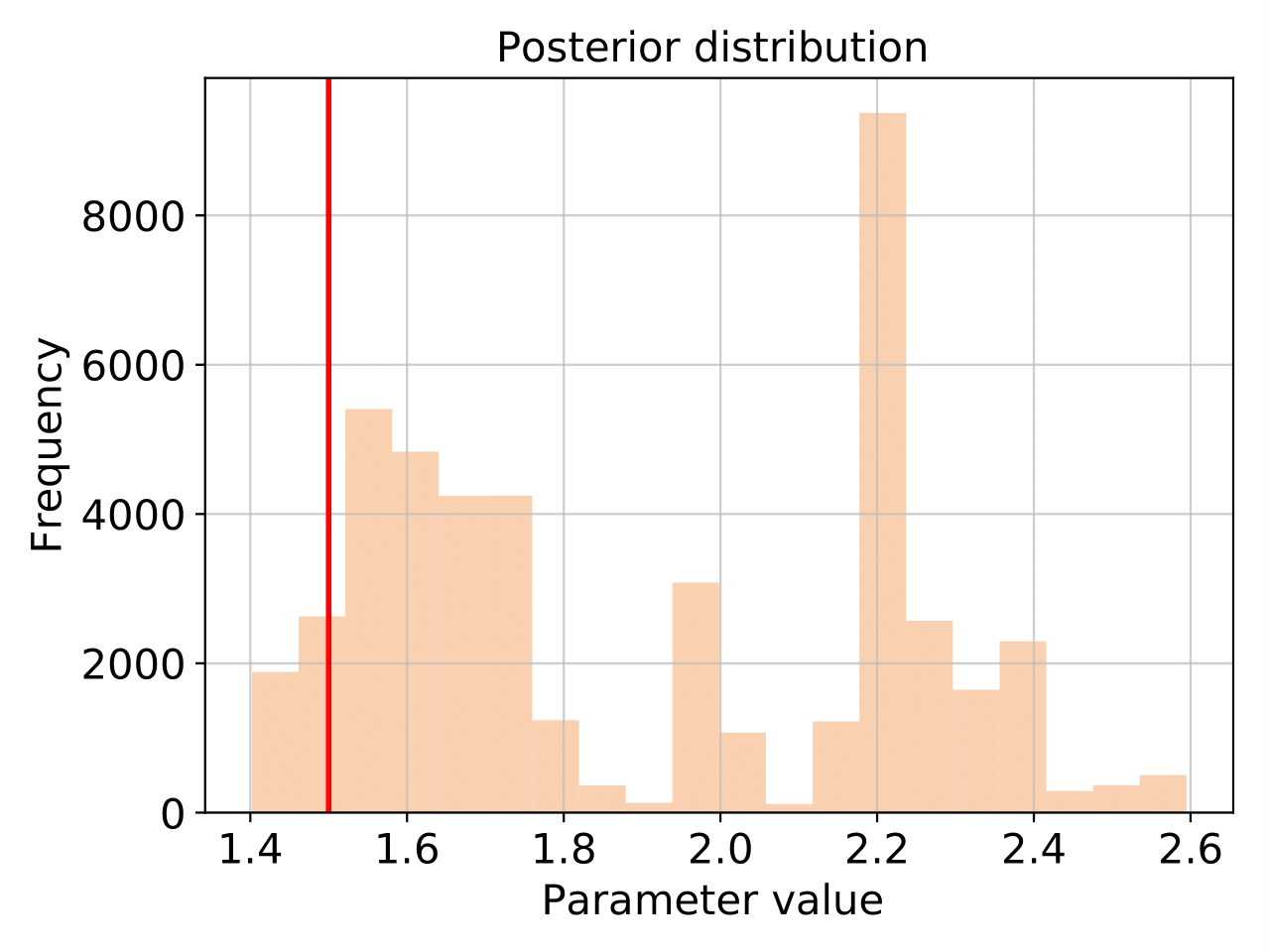
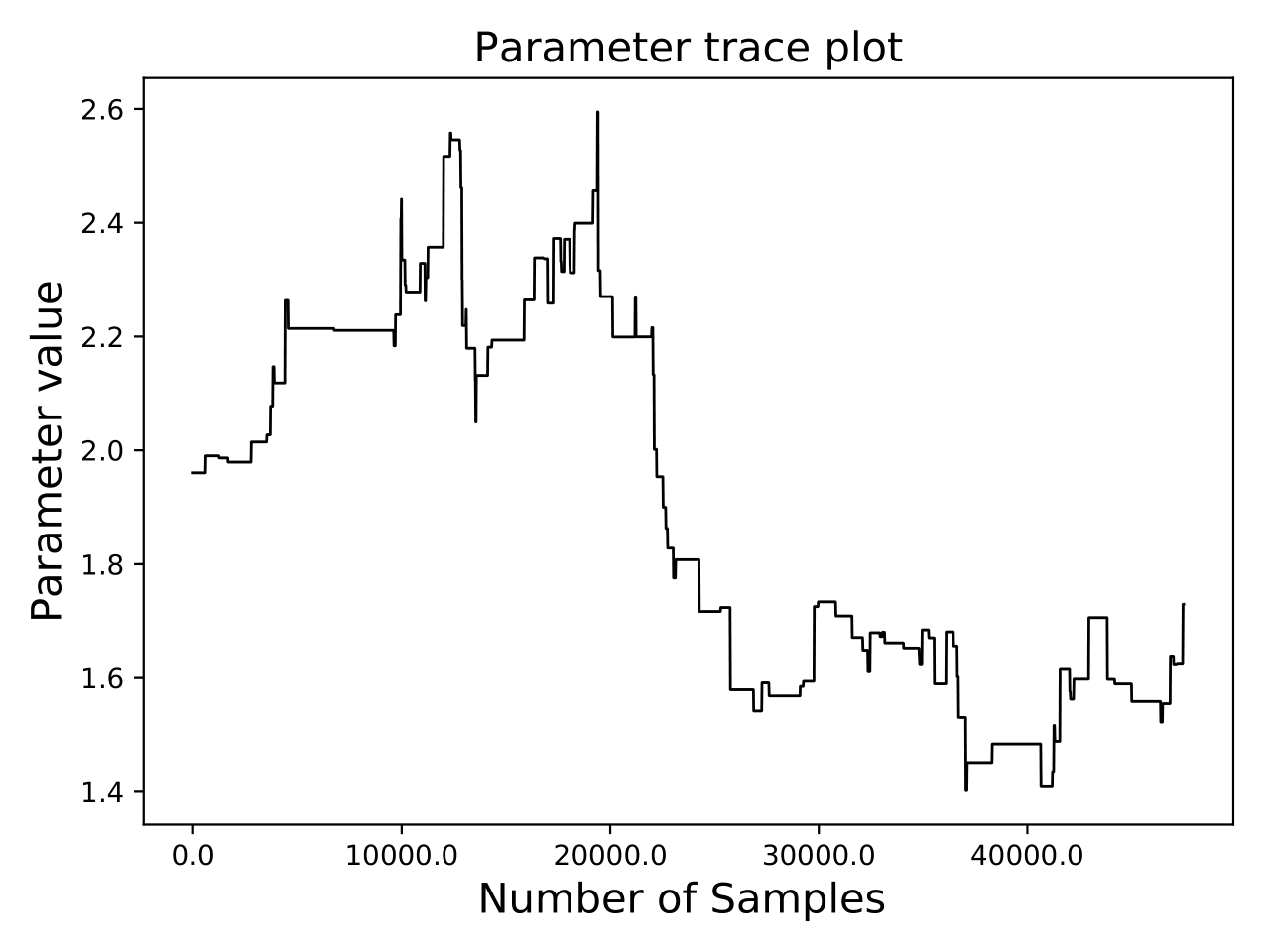
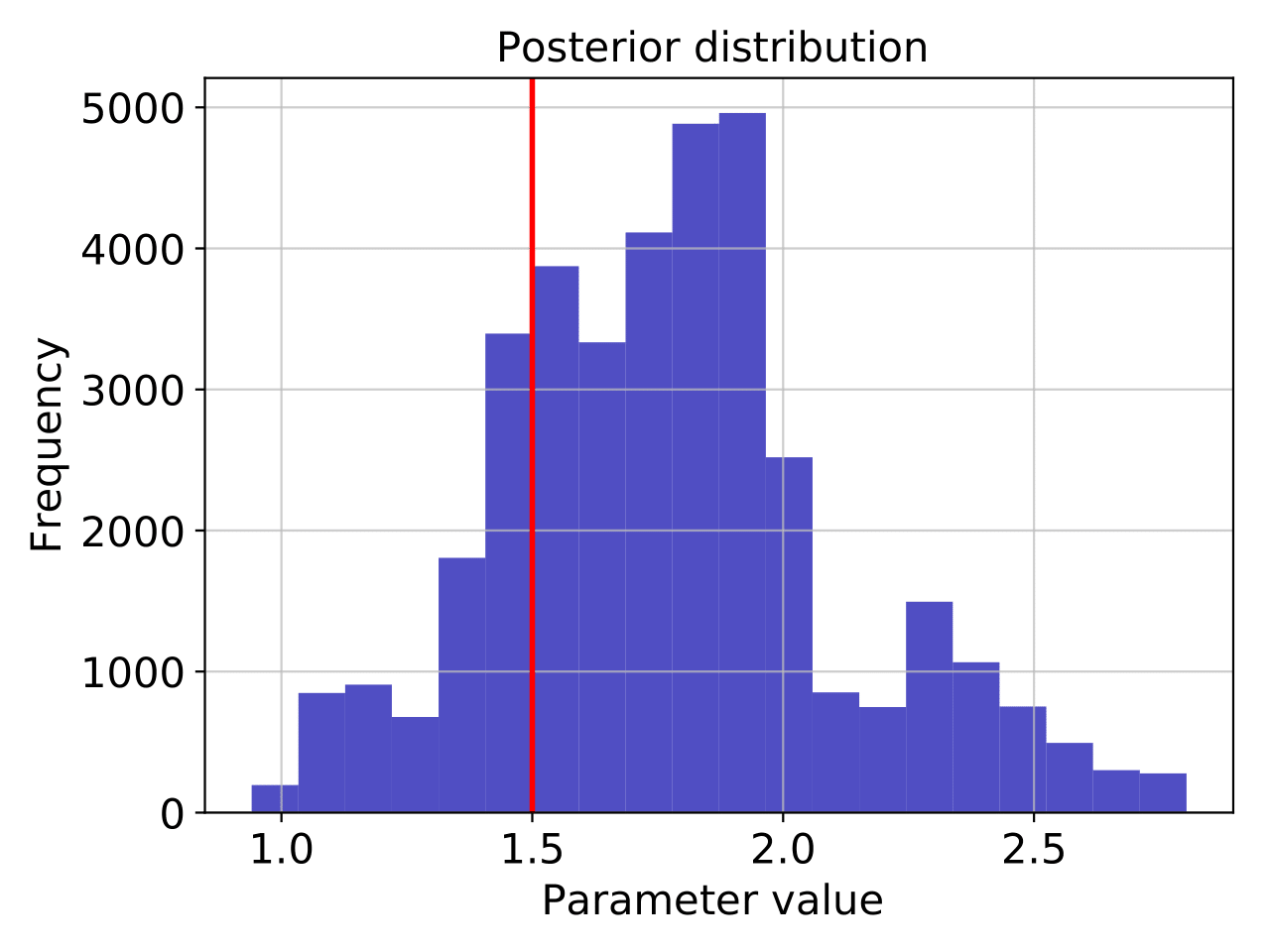
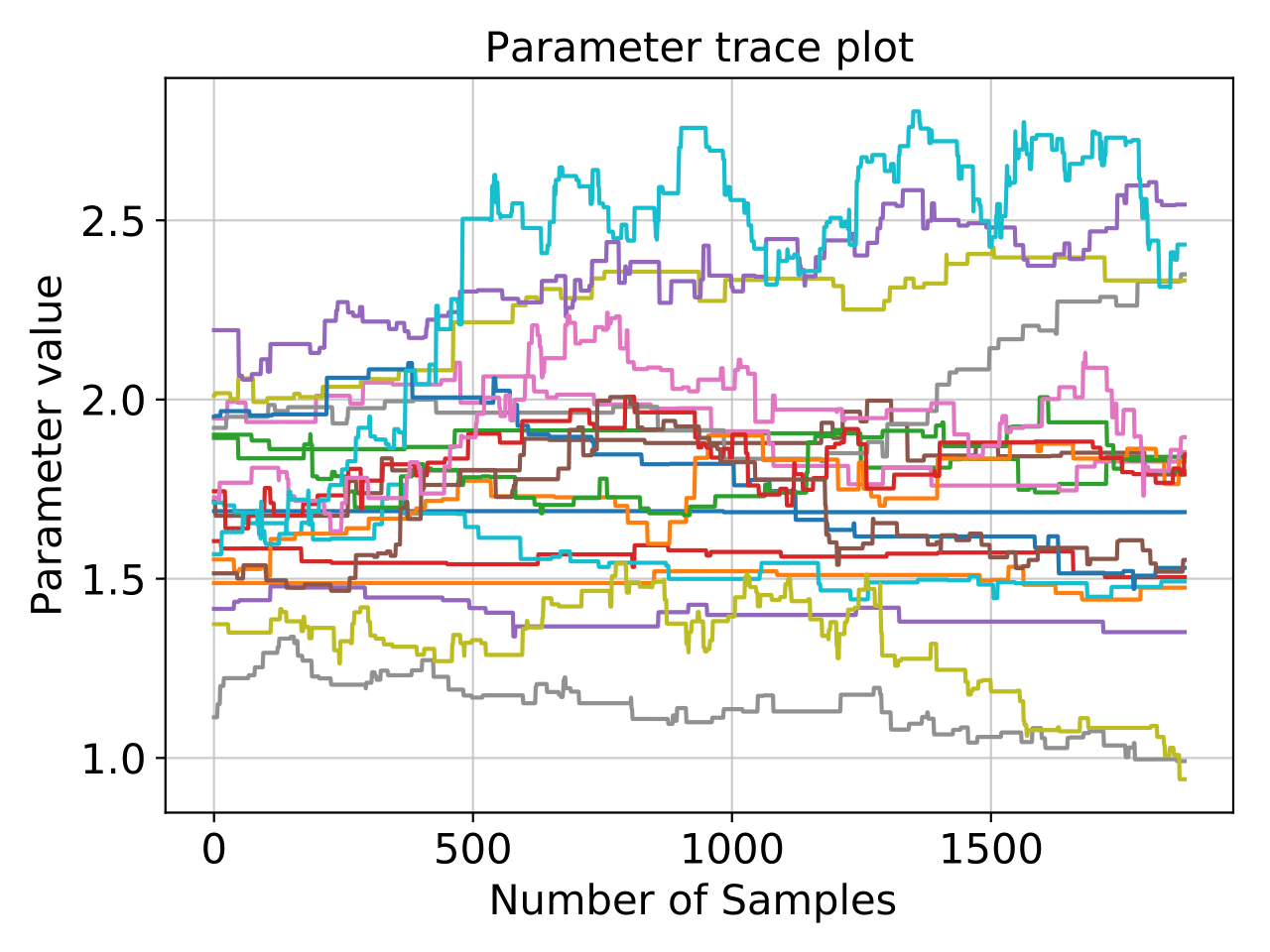
The trace plots show accepted values of the chain for given samples. PT-Bayeslands demonstrates significantly improved posterior distribution estimation and chain mixing compared to the single-chain approach.
Publication
Published in Computers & Geosciences (Elsevier), the work demonstrated that Bayesian methods can quantify uncertainty in landscape evolution predictions — critical for geological risk assessment where point estimates hide the range of plausible outcomes.